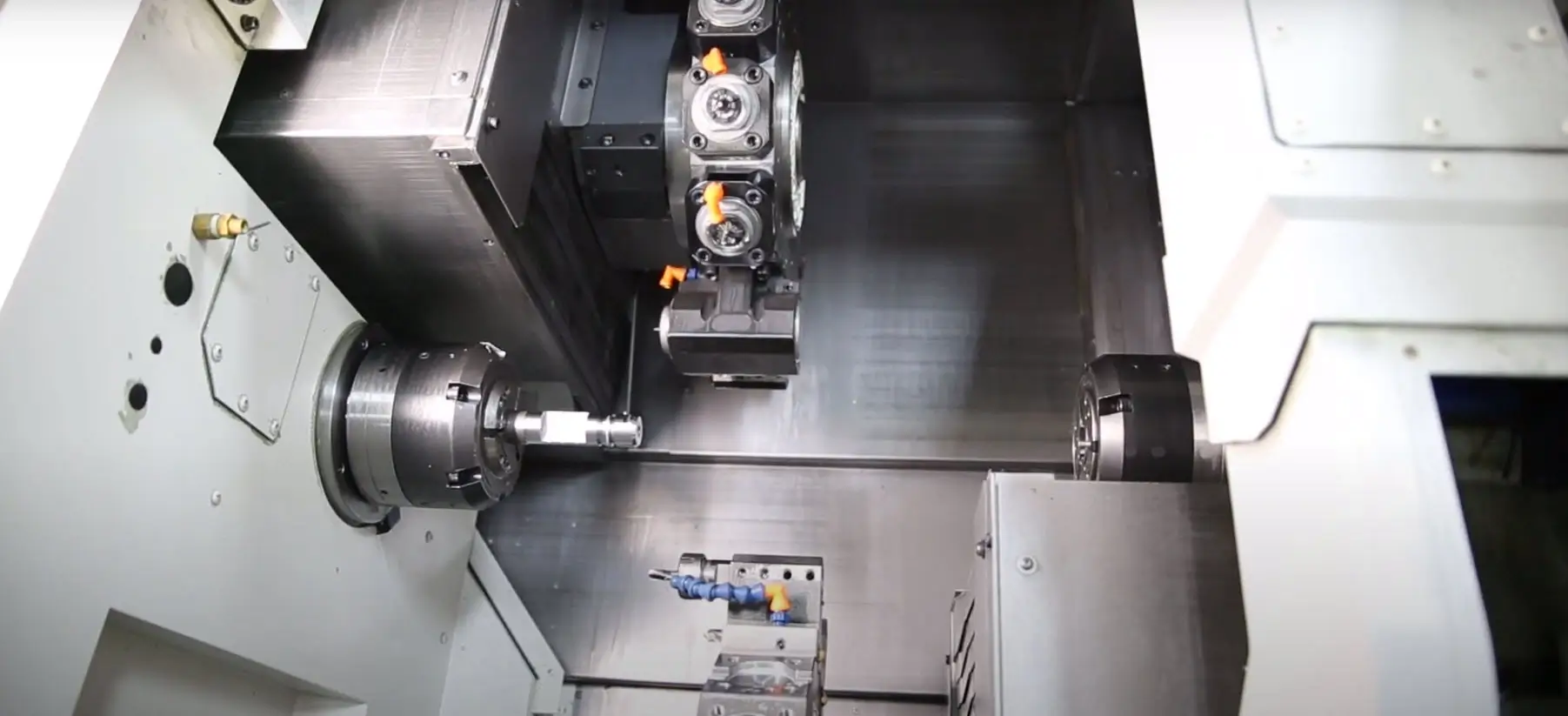

Machining cost is very largely determined at the design stage. The geometry, tolerances, and feature layout on a print determine how fast a part can be produced, how often tools need to be changed, and how much inspection is required.
At Sharp Turn Products, many cost issues traced back to CNC turning and Swiss machining jobs come down to design details that can be adjusted without changing the inherent function of the part.
Below are common design features that drive up machining cost, along with handy design tips that engineers can consider early in the design process.
Tight Tolerances Across the Entire Part
Tight tolerances are one of the biggest cost drivers in machining. Holding ±0.0005″ instead of ±0.002″ may not look like much on a drawing, but it typically entails:
- Slower feeds and speeds
- Additional finishing passes
- More frequent tool changes
- Extra inspection time
Design tip:
Apply tight tolerances only on features that directly affect fit, sealing, alignment, or performance. Many features, especially non-mating diameters or surfaces that are cosmetic in nature, can often be opened up without issue.
Deep Grooves and Narrow Cut Features
Grooves that are deep relative to their width can make machining much harder and longer to accomplish. These features necessitate the use of long and thin tools that are more susceptible to chatter and deflection, which can drive up both cycle time and tool wear. Grooves are common on turned parts, but their proportions matter more than many realize.
Design tip:
- Increase groove width where possible
- Reduce depth-to-width ratios
- Use standard groove sizes when function allows
If a groove must be deep, letting the machinist know which surfaces are crucial can help optimize tool selection and machining strategy.
Non-Standard Threads and Fine Pitches
Custom thread forms and very fine thread pitches add cost by requiring specialized tooling and slower cutting speeds. Inspection time also escalates with greater thread complexity. Threads that look minor on a drawing can have a substantial impact on machining time.
Design tip:
Specify standard thread sizes and pitches whenever possible. Avoid fine threads unless they are required for strength or adjustment. If thread engagement length can be reduced, machining time often drops as well.
Sharp Turn regularly machines threaded components on both CNC turning and Swiss machines, and standard threads are faster to produce and easier to control.
Thin Walls and Flexible Sections
Thin walls tend to flex during machining, particularly on small-diameter parts. This can lead to inconsistent dimensions, poor surface finish, or the need for multiple light finishing passes. Thin features near tight-tolerance areas are especially challenging.
Design tip:
- Increase wall thickness slightly if possible
- Add support features during machining that can be removed later
- Avoid thin sections adjacent to tight-tolerance features
In Swiss machining, where material is supported close to the cutting tool, thin features can be handled more effectively; but even then, modest increases in thickness can reduce cost and improve repeatability.
Overly Complex Geometry
Steps, tapers, blended radii, and angled features are known to add machining time. Each added feature may require a tool change, a secondary operation, or a slower cutting strategy. Some complexity is necessary, but not all of it adds value.
Design tip:
Ask the following question during design reviews: Does this feature serve a functional purpose, or is it just inherited from an earlier revision? Trimming non-essential geometry or standardizing radii can noticeably shorten machining time for high-volume CNC turning jobs.
Designing for the Machining Process
Parts designed specifically for CNC turning or Swiss machining are almost always more cost-effective than parts designed generically and “made to fit” later. Designs that fight the machining process tend to increase setup time and handling.
For example:
- Consistent diameters machine faster than constantly changing profiles
- Features oriented to be completed in one setup reduce handling time
- Bar-fed Swiss parts benefit from designs that minimize secondary operations
Early design conversations usually uncover small changes that save time on every single part produced.
Talk With a CNC Machining Expert
Most cost problems in machining are not the result of a bad design, but of perfectly reasonable choices adding friction to the process. A tolerance tightened out of caution, a groove sized without thinking about tooling, or a feature placed where access is limited can all slow production in small but expensive ways.
Looking at a part through the lens of CNC turning or Swiss machining often reveals simpler paths to the same result. Those conversations tend to happen too late, after a print is released and changes are harder to make.
Bringing Sharp Turn into the discussion earlier allows those tradeoffs to be addressed while the design is still flexible. Talk With a CNC Machining Expert to get practical input before time and cost are locked in.